By David Dew
While the previous article hopefully gave an insight into my coaching process around swimming, here, I am taking a bit of a different direction. I have been asked by multiple swimmers from Vale Swim Collective (VSC), and one of my fully coached athletes, about cramp, and I found myself giving the generic advice of; electrolytes, strength work, pacing on the bike and staying warm in open water. But honestly, it is a long time since I have read anything on cramp, so I have taken this opportunity to educate myself and hopefully help my athletes (and anyone else reading this) as well.
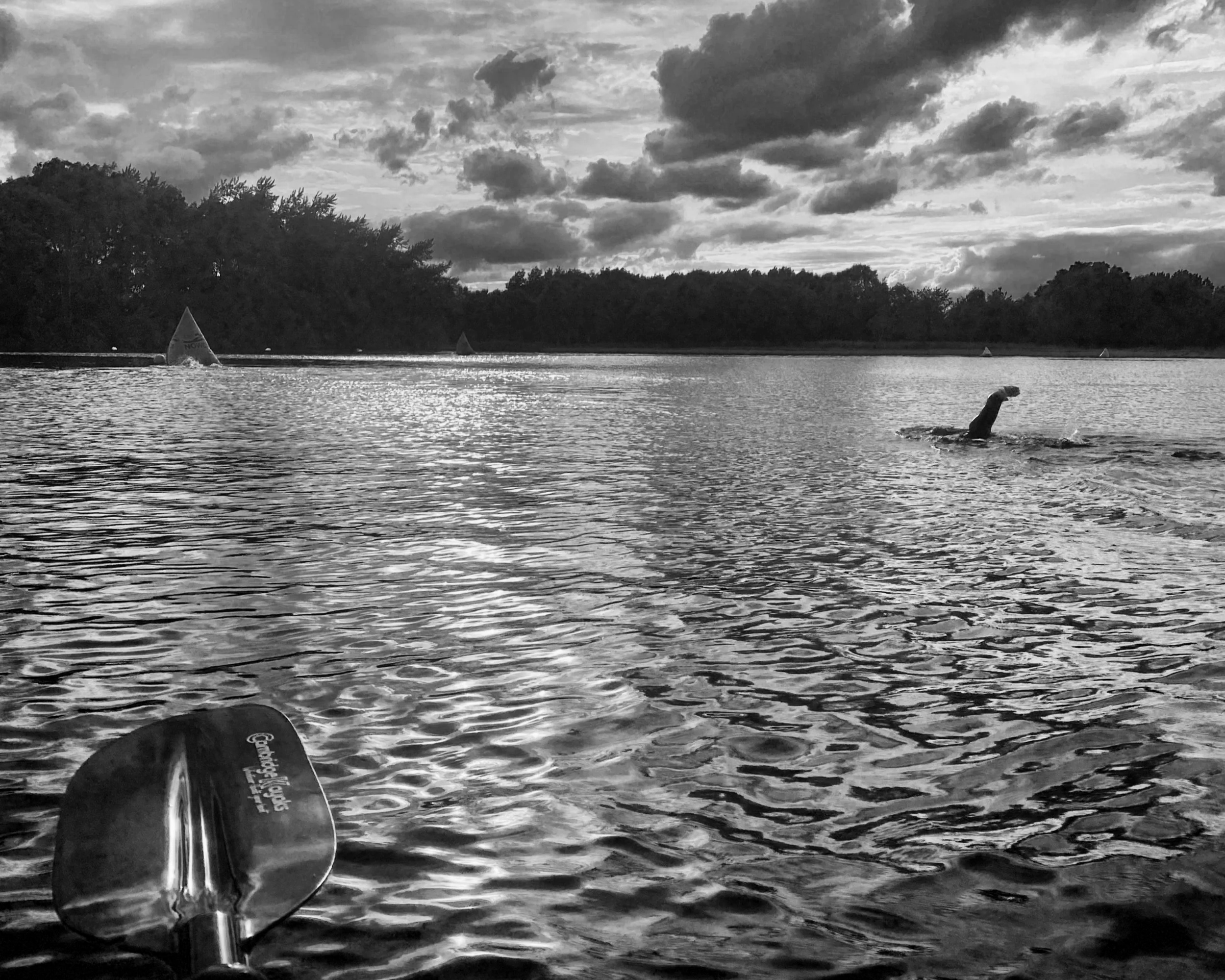
The two cases that really prompted me to think about this were a swimmer from VSC who often gets calf cramp in cold open water. Simple then, stay warm and that should solve it…except she sometimes wakes up in the night with cramp too. Ok so electrolytes then? Brings a bottle of them to the pool and keeps a careful eye on hydration throughout the day. More strength work? Has a personal trainer, and they regularly do calf work. This no longer sounded simple to me.
Similarly, a triathlete I coach suffered with severe cramps in an end of season race last year. The cramps began right out of the swim, so my first thought was the cold water in the UK in September. But then he got ill the following day and confessed that he hadn’t been feeling 100% the morning of the race. Ok so now these cramps, in my head, are worth keeping an eye on, but we almost certainly have the likely cause. That is, until that spring, when he began to regularly cramp in the pool. This time electrolytes seemed to solve it. Then he cramped on the run of a middle distance tri, but the data shows that he over-biked slightly. So, for this athlete, in each scenario it seems like we found a solution/cause, but is it that simple? It seems more likely to me that there is a connection. I am, however, writing this introduction before I begin to read the recent research on the subject. So, if you’ll excuse me, I am off to spend some time on PubMed.

Reading some research on a tiny screen just so I get to use a microscope.
And “Ta-da!” with a Blue Peter esq “here’s some research I read earlier” effect, I’m back; a new and very slightly more educated me.
What did I find?
Well, to spoil the ending of the article somewhat, a 2022 review by Miller et. al. (1) found that rather than a simple single cause = effect, exercise associated muscle cramps (EAMC) are caused by multiple factors that can vary from individual to individual. There are, therefore, things that we can do to reduce the likelihood of cramping, but it is unlikely that we can rule it out completely in someone who is prone to it, because it is simply impossible to control all factors, especially on the day of a race.
I think the most useful direction to go now, is to look at the individual factors that are thought to contribute to EAMC, look at the evidence for them and then see what needs to be done to reduce that risk factor.
Dehydration/low electrolytes/hot weather
This is the big one, the one that was cited most often by coaches, including myself, for a large part of the recent history of endurance sport. Two studies in the early 2000s, (That feels recent, doesn’t it? Nope, alarmingly, that’s 20 years ago!) found that tennis players (2) and American football players (3) showed higher fluid and sodium loss during competition in those with a history of cramping.
However, the more recent research on this brings up some interesting points, I think most compelling of which is that if EAMC was caused purely by loss of fluid and sodium, then the sufferer might experience cramps more generally across the whole body. Fluid and sodium losses occur systemically, not locally, raising the question of why it is the working muscle that cramps?
Elsewhere, more recently, no link has been found between cramp and dehydration, with one study taking participants up to 5% body weight loss due to dehydration without finding an increased rate of cramping (4). Similarly in marathon racing, post-race medical analysis showed no difference in body weight loss or electrolyte levels of those that cramped vs those that didn’t (5).
So, should you save some money and stop buying electrolytes? Maybe. That frustratingly non-committal answer is because it seems to largely depend on your personal risk factors rather than electrolytes being a magic cure for cramps. So, reading the literature, I don’t think electrolytes should be the main focus of your attempts to reduce cramps, but if you find that they help then keep using them in safe quantities.
Altered Neuromuscular Control
This sounds complex, and it sort of is, but to put it simply: it is the theory that multiple factors (such as fatigue) can alter the signals involved in muscle contraction and relaxation. This can often lead to involuntary contractions when the balance between excitatory and inhibitory signals is disrupted (1).
Most cramp occurs in muscles that are active or exercising, and occurrence is even higher in muscles that cross multiple joints. Another thing that might sound obvious, but that is useful to know is backed by the research, is that EAMC occurs more frequently towards the end of competition, i.e. when a muscle is in a fatigued state. The study that found this (6) , also found that among the 15% of marathon runners who cramped, mostly around the 36km mark, there was no difference in hydration level between crampers and non-crampers.
The most likely, and least satisfying answer
It’s nice to have clean, certain answers, but with biological processes, this is very rarely the outcome we get. A new theory has been posed about EAMC, that rather than a single root cause, it is actually down to multiple factors, and the degree to which you personally satisfy those various factors. The diagram below explains this in great detail (1).

If that looks a bit intense, then here it is as a summary; you might be dehydrated one day and not cramp. In another session you might have had a bad night’s sleep, be dehydrated but still not cramp. In another session again you might have had poor sleep, be dehydrated and also have had a big training session the day before…then cramp! In this scenario, you’ve crossed a threshold, where you have accumulated enough of these cramping risk factors, that mean that the working muscle in a given session hits its limit and cramps.
Other factors that seem to affect swimmers specifically

Pointed toes: honestly, this is a guess because I have not found any literature that tested cramping in various positions and/or muscle lengths. BUT, I think it is a solid guess for two reasons: 1, muscles that cross multiple joints cramp more frequently because they contract from shortened lengths, therefore it could be reasonable to suggest that when kicking in the water with a pointed toe, you are contracting the gastrocnemius while it is at a shortened length, and 2, if stretching is an accepted acute treatment for cramp (see “What should you do?” section), simply doing the opposite of stretching (shortening the muscle for long periods of time) could maybe increase risk of cramp.
Cold water: if anyone can find any research on this I would be really grateful, I haven’t seen anything to do with cold water and cramping. Any temperature related cramp studies tend to be to do with hot conditions and the often associated dehydration. What I have been asked about by the swim group specifically, is calf cramp during cold water endurance swims.
One thing that happens in cold conditions is vasoconstriction; the blood vessels contract to reduce blood flow and preserve core body temperature. Reduced muscle function and/or neuromuscular signalling in these conditions seems like a plausible theory, but I haven’t found any data that backs it up. Several in the VSC find that cramps happen more frequently when water temperature approaches 10 degrees Celsius. Reading between the lines of the research I have cited above, it seems reasonable to me that rapidly cooling a muscle while also exposing it to other risk factors such as contracting in a shortened state could cause the misfiring of signals that can lead to EAMC. Perhaps this is just another factor in the multi-factorial theory of EAMC?
And what about those night time cramps?
A 2021 paper (7) found that a third of the participants in the study experienced night time cramps. It also found that a significantly reduced risk of cramp was correlated with increased flexibility and foot/toe strength.
So, it seems reasonable to consider improving both calf and foot strength and flexibility. As a bonus, in my thinking, this could also help to reduce the fatigue risk of EAMC when in the later stages of an endurance event.
So what should you do?
While no one thing is likely to eliminate your cramp, I now think that the best practice would be to look at the diagram above, assess the risk factors, find those that you think yourself most at risk of and do your best to reduce them. For example, a checklist that looks something like this could be useful:
1. Am I fatigued?
2. Has my training load been higher than usual?
3. Am I well rested?
4. Am I pushing beyond the pace I have trained for?
5. Am I unwell at all?
6. Are there environmental factors (hot or cold)?
7. Do I have a history of cramp in this situation?
8. Has something changed mechanically? (change of technique, bike position etc.)
There are likely many more too, but tailoring this checklist to your own risk factors will be the most useful thing you can do to reduce cramping likelihood. And if you do cramp? Stretch the muscle until it relaxes, then reduce the pace if you are going to continue, because cramping during exercise increases the risk that that same muscle will cramp again during that same session/race.
Conclusion
This has been an interesting one for me, and at several points I’ve had to catch myself before I tried to defend the advice I have given in the past. No longer will I simply say, “have you tried using electrolytes?”
As is the case with most other aspects of coaching, the advice needs to be personalised for the individual athlete.
I’m really keen to hear what you think of this topic, let me know if you have any questions or if you have an idea of what you’d like me to write about next.
Originally published September 2026. Updated periodically as my coaching and understanding evolve.
Sources
1. An Evidence -Based Review of the Pathophysiology, Treatment, and Prevention of Exercise-Associated Muscle Cramps, Miller et. al. 2022.
2. Heat cramps: fluid and electrolyte challenges during tennis in the heat, Bergeron, 2003.
3. Sweat and sodium losses in NCAA football players: a precursor to heat cramps? Stofan et. al. 2005.
4. Significant and serious dehydration does not affect skeletal muscle cramp threshold frequency, Braulick et. al. 2013.
5. Muscle Cramping in the Marathon: Dehydration and Electrolyte Depletion vs. Muscle Damage, Martinez-Navaro et. al. 2020.
6. Exercise-induced muscle cramp: a prospective biochemical study in marathon runners, Maughan.
7. Correlates of night-time and exercise-associated lower limb cramps in healthy adults, Hawke et. al. 2021